Immersive Installations — Making a Room Legible to Itself
A recurring series of participatory installations built for annual gatherings. Each used a different medium — physical collage, personal artifacts, narrative world-building, network analysis, and live data — to reflect a group's relationships and shared history back to itself.
2022
Conspiracy Wall
Connected friends through playful, disparate patterns using photographs, shared traits, social media content, and web-like visual ties.
2023
Perfect Human Mosaic
Combined photographs, personal belongings, and distinctive traits from friends into a composite representation of the “ideal person.”
2024
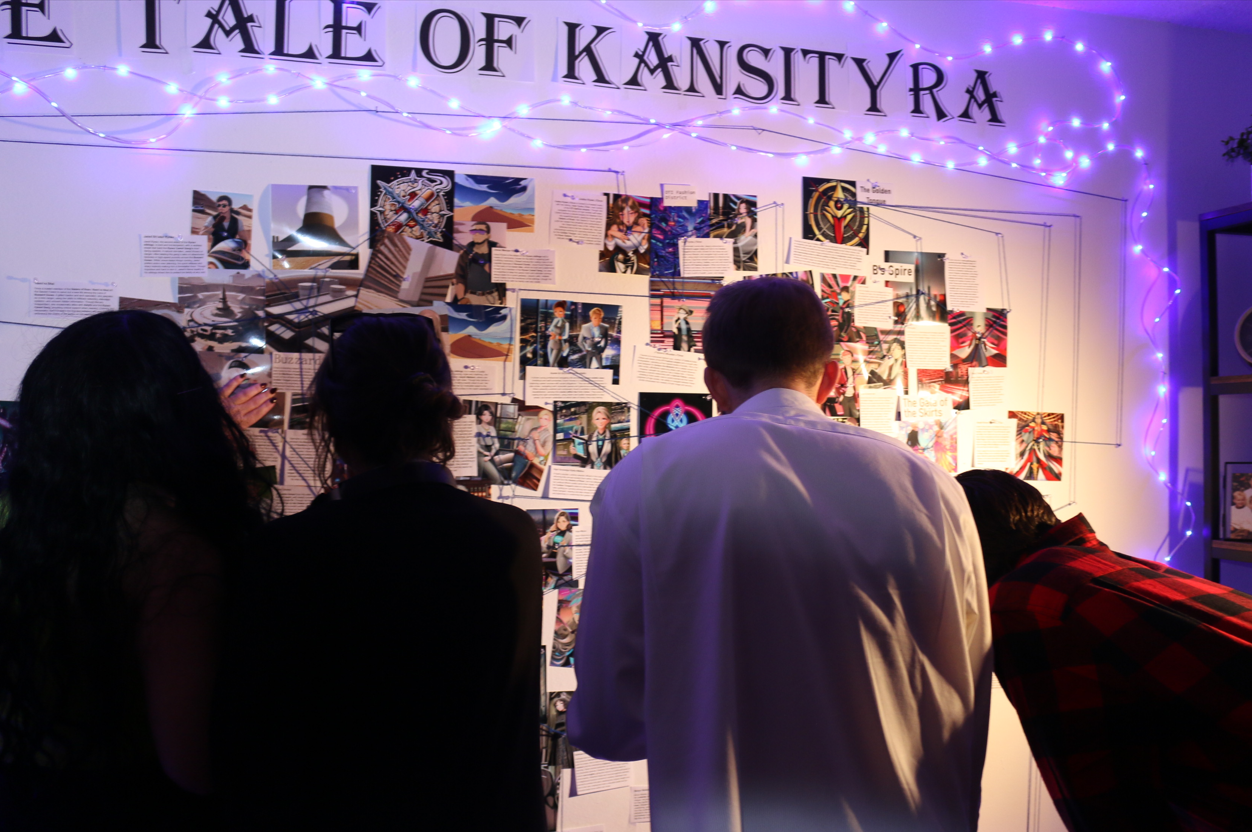
The Tale of Kansityra
Built a fictional science-fiction universe from real relationships, local places, rivalries, jokes, romance, and shared history.
2025
Panopticon
Added a computational layer: audience inputs and interactions became live network, clustering, and association visualizations.
Narrative system · 2024
The Tale of Kansityra
A physical narrative world built from the social material already present in the group — familiar places, interpersonal history, running jokes, alliances, romance, and vendettas — translated into a fictional universe guests could explore together.
Computational system · 2025
Panopticon — the room begins to participate.
Panopticon introduced structured data and real-time feedback. Audience inputs and interactions were translated into network, clustering, and association views, creating a loop between the people in the room and the installation itself.
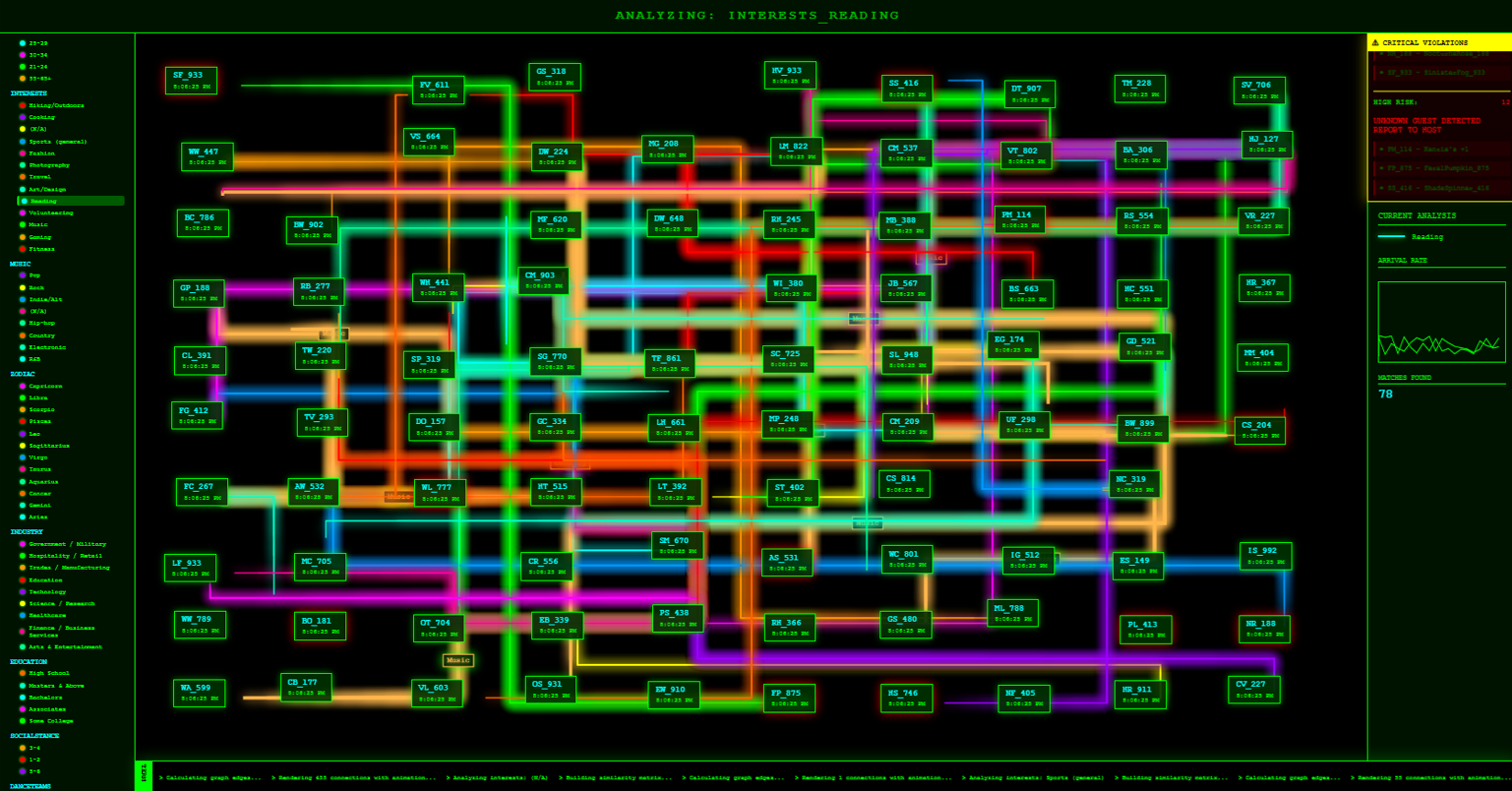
Interest Network
Guests represented as nodes and shared affinities as edges, turning individual responses into a visible map of connection across the room.
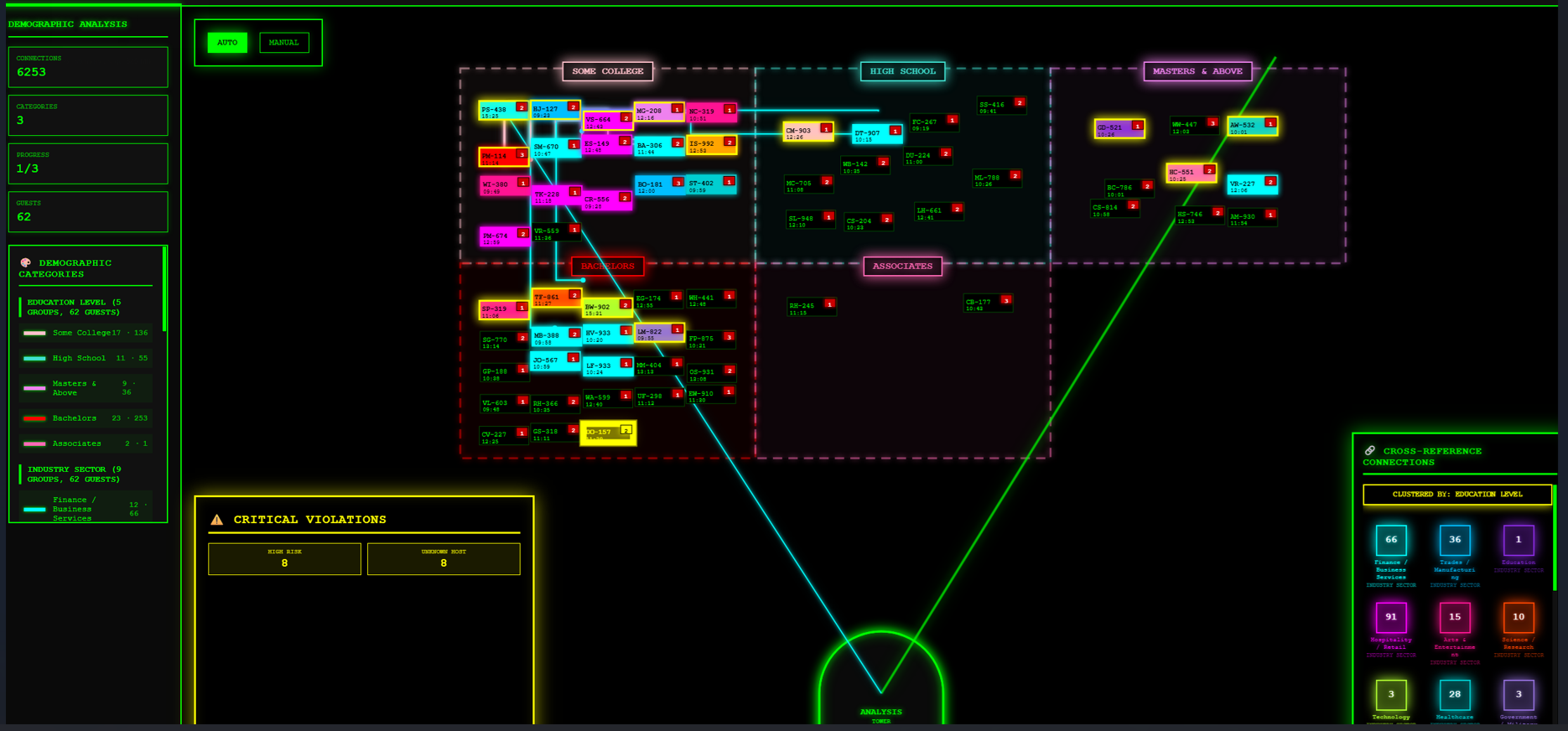
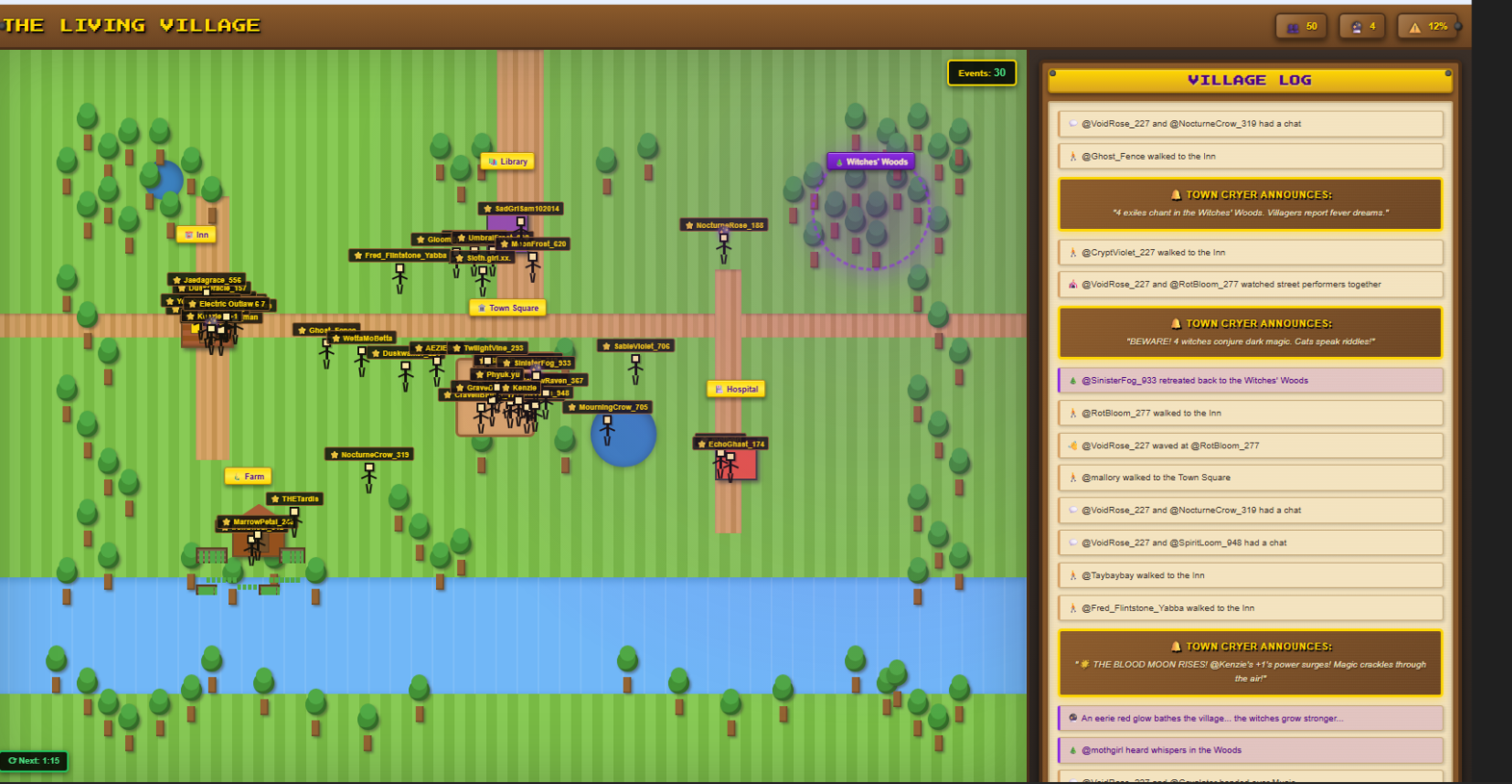
Participant identities anonymized in displayed data.
The progression
Over time, the installations shifted from depicting a social system to allowing the system to participate in its own representation.
What began as visual storytelling gradually incorporated personal artifacts, fictional narrative, structured data, statistical association, network visualization, and real-time feedback. The medium changed; the underlying interest did not.
The broader question
How do you make the invisible structure of a group visible?
The same instinct runs through much of my work, expressed here through art, software, humor, narrative, and shared experience: observe a system closely enough to find its hidden structure, then build something that makes that structure easier to see.